
Last Updated:
August 15, 2026
Figuring out how often to fertilize your lawn can be challenging, especially in Illinois where changing temperatures and distinct seasons affect turf growth throughout the year. Most Illinois cool-season lawns benefit from a fertilization program built around seasonal growth rather than a fixed schedule that treats every month the same.
For many homeowners, two to four fertilizer applications per year may be appropriate, although the ideal frequency depends on grass type, soil conditions, lawn health, fertilizer formulation, and local growing conditions. Keep reading to learn more!
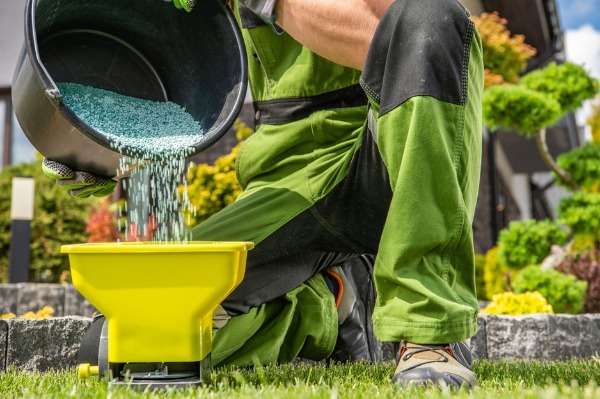
Spring is an important time for Illinois lawns because turf is coming out of winter dormancy and beginning its annual growth cycle. However, that does not necessarily mean homeowners should immediately apply a heavy fertilizer treatment as soon as temperatures rise.
Cool-season grasses such as Kentucky bluegrass, perennial ryegrass, and tall fescue typically begin growing as soil temperatures become more favorable. A spring application may be appropriate when the lawn needs additional nutrients, particularly if it has experienced winter damage or poor growth.
A spring lawn fertilization treatment can help support:
Illinois summers can bring high temperatures, periods of drought, and significant heat stress. Cool-season turf generally grows less aggressively during the hottest part of summer, which means frequent fertilizer applications may not be beneficial.
Applying excessive nitrogen during periods of heat or drought can encourage growth when the grass is already under environmental stress. This can increase the lawn's demand for water and mowing while potentially making it more difficult for the turf to tolerate challenging conditions.
Homeowners should consider factors such as:
Fall is one of the most valuable times to fertilize cool-season lawns in Illinois. As temperatures begin to moderate, grass can return to active growth while avoiding some of the extreme heat associated with summer.
A properly timed fall fertilizer application provides nutrients that can support root growth and turf recovery. Additional fertilization later in the fall may also help prepare the lawn for winter dormancy.
Fall fertilization can benefit Illinois lawns by supporting:
Not every lawn in Illinois has identical nutritional requirements. The type of turfgrass growing in your yard can influence both the amount of fertilizer needed and the timing of applications.
Kentucky bluegrass, perennial ryegrass, and turf-type tall fescue are among the cool-season grasses commonly found in Illinois landscapes. While they share similar seasonal growth patterns, their growth characteristics and nutrient requirements can differ.
Grass type can affect:
Fertilizer applications should not be based solely on what the grass looks like. Conditions below the surface can have a major influence on how effectively turf can use available nutrients.
Soil compaction, pH imbalances, poor drainage, and nutrient deficiencies can all affect lawn performance. A soil test can provide useful information about nutrient levels and help determine whether your lawn actually needs additional fertilizer.
Before establishing a long-term fertilization program, homeowners may want to consider:
A struggling lawn does not always need more fertilizer. Grass can become thin, discolored, or weak because of drought, disease, insect activity, compacted soil, improper mowing, or insufficient sunlight.
Applying fertilizer without identifying the source of the problem can sometimes make lawn issues more difficult to manage. For example, turf that is already stressed by extreme heat may benefit more from proper irrigation and reduced mowing stress than from an additional nitrogen application.
Before fertilizing, look for signs such as:
More fertilizer does not necessarily mean a healthier lawn. Applying nutrients too often can lead to excessive leaf growth, increased mowing requirements, nutrient runoff, and other lawn problems.
Overfertilization can also contribute to weak, overly lush growth that may be more susceptible to certain stresses. Following the recommended application rate is just as important as choosing the correct time to fertilize.
A thoughtful fertilization program should focus on providing the right amount of nutrients when the grass can use them rather than repeatedly applying fertilizer whenever the lawn appears less green.
Q: How many times a year should I fertilize my lawn in Illinois?
A: Many Illinois cool-season lawns benefit from approximately two to four fertilizer applications per year. The ideal number depends on grass type, soil conditions, lawn health, and the fertilizer program being used.
Q: What is the best time to fertilize a lawn in Illinois?
A: Fall is generally one of the most beneficial seasons for fertilizing cool-season lawns in Illinois. Spring can also be appropriate when the lawn needs nutrients to support active growth and recovery.
Q: Should I fertilize my lawn during the summer?
A: Summer fertilization should be approached carefully because Illinois lawns can experience heat and drought stress. Fertilizing during severe stress may not provide the desired results.
Q: Is fall fertilizer important for Illinois lawns?
A: Yes. Fall is a major growth period for cool-season grasses, and properly timed fertilization can support root development, turf recovery, and preparation for winter.
Q: Can I fertilize my lawn too often?
A: Yes. Excessive fertilizer can encourage unnecessary growth, increase mowing demands, contribute to nutrient runoff, and potentially stress the lawn.
Q: Should I get a soil test before fertilizing?
A: A soil test can be helpful, particularly when a lawn has persistent growth or color problems. Testing can provide information about nutrient levels and soil pH so fertilization decisions can be based on actual soil conditions.

