
Last Updated:
September 5, 2026
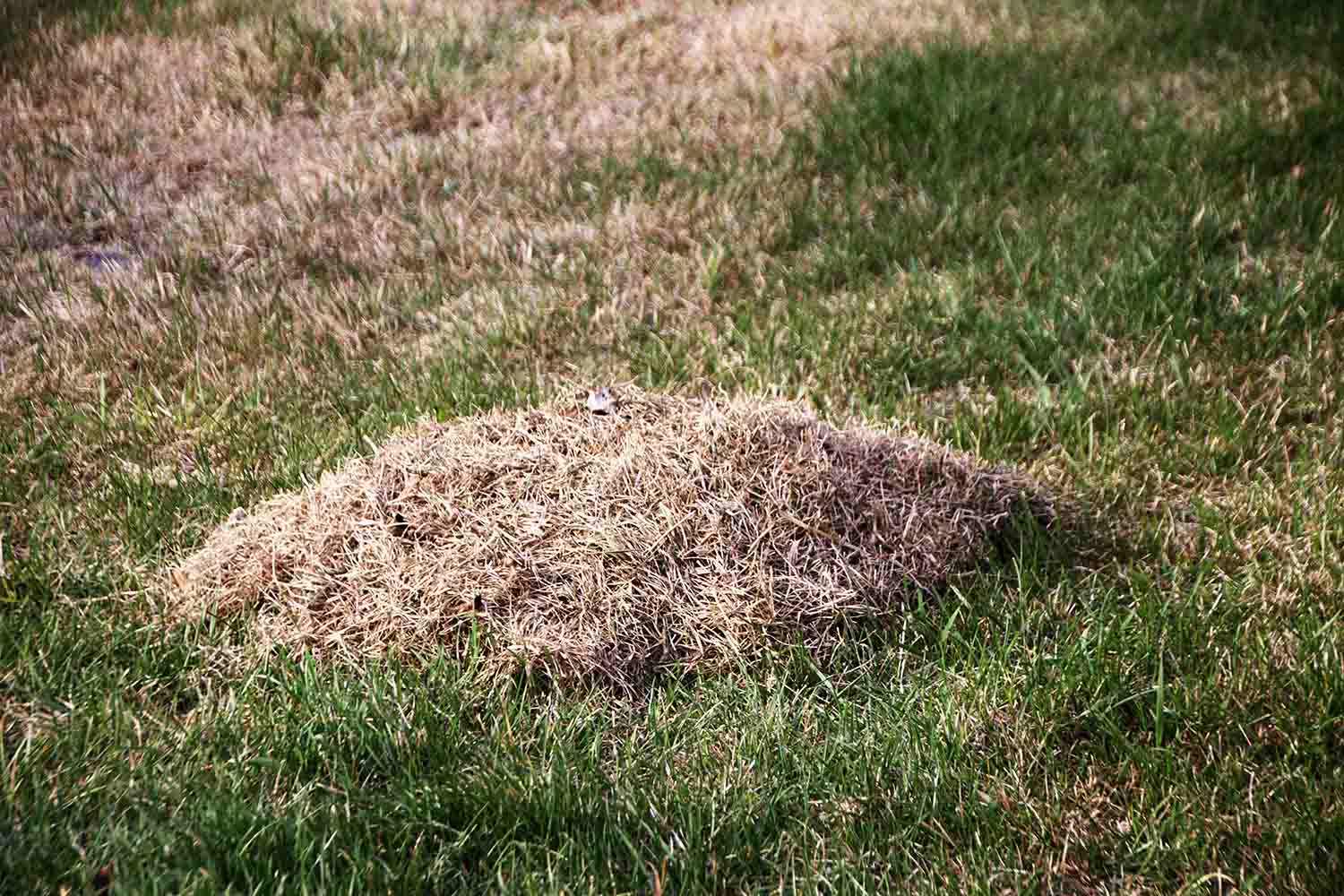
Lawn aeration and dethatching are two different lawn care practices, but they can complement each other when a lawn has a significant buildup of organic material near the soil surface. Aeration creates openings that allow air, water, and nutrients to move into compacted soil, while dethatching removes excessive material that can interfere with that process.
If your lawn has excessive thatch, dethatching first can help make aeration more effective. However, not every lawn needs to be dethatched before it is aerated. The key is determining whether the thatch layer has become thick enough to interfere with healthy soil and root development. Let’s look a little closer at thatch to understand why and when it should be removed.
Thatch forms naturally as grass roots, stems, and other organic material accumulate between the green portion of the grass and the soil. Contrary to a common misconception, grass clippings themselves are not usually the primary cause of excessive thatch. Problems are more likely when organic material accumulates faster than microorganisms can break it down.
A thin layer isn't necessarily something you need to remove. Trouble begins when that layer becomes dense enough to restrict the movement of water and nutrients. Thick thatch can also create a spongy surface and provide favorable conditions for certain insects and lawn diseases.
Signs that your lawn may have too much thatch include:

Aeration is intended to open the soil and relieve compaction. If a substantial thatch layer sits above that soil, it can interfere with how effectively the aeration process reaches the roots.
Removing excessive thatch first can expose more of the soil surface and allow the aerator to work more effectively. Once the thatch has been cleared, aeration can create channels through compacted soil where water, oxygen, and nutrients can reach the roots.
Combining the two services can provide several benefits:
Timing depends heavily on the type of grass growing in your lawn. In general, these treatments should be performed while the grass is actively growing and has enough time to recover from the physical stress of the work.
For many cool-season lawns, late summer into early fall is an especially useful window. Moderate temperatures and favorable growing conditions allow grass to recover while new seed has an opportunity to establish before winter.
Spring can also be appropriate in certain situations, but the ideal timing depends on grass type, local weather, soil conditions, and the specific reason for performing the treatment.
No. Dethatching should not automatically be performed every time a lawn is aerated. Removing too much organic material can unnecessarily disturb the turf and eliminate a layer that provides useful benefits.
The decision should be based on the condition of the lawn rather than simply following a yearly schedule. If the thatch layer is relatively thin and water is reaching the soil without difficulty, aeration alone may be all that is necessary.
A lawn may benefit from aeration without dethatching when:
One of the easiest ways to determine whether dethatching is necessary is to inspect the soil and thatch layer directly. Use a small shovel or garden knife to remove a section of turf, then examine the area between the green grass and the soil.
You are looking for a dense layer of brown, fibrous organic material. Measuring this layer can help determine whether excessive thatch is present. If it is relatively thin, aggressive dethatching may not be needed. If it has become substantially thicker and is interfering with water movement or root development, removing some of that material before aeration may be beneficial.
Pay particular attention if your lawn has experienced:
Dethatching can correct an existing problem, but good lawn maintenance can help prevent excessive thatch from developing in the first place. Healthy soil biology naturally breaks down organic material, so the goal is to maintain conditions that support normal decomposition and balanced grass growth.
Homeowners can help limit thatch buildup by:
For lawns with excessive thatch, removing the buildup before aeration can be a smart approach. Dethatching clears the way for aeration to reach the soil more effectively, allowing the two treatments to work together to improve water movement, nutrient access, and root development.
However, dethatching is not automatically necessary before every aeration service. If your lawn has a healthy, manageable amount of thatch, aeration alone may provide the soil improvement it needs.
When you're unsure, inspecting the thatch layer before starting either treatment is the best place to begin. A professional lawn care provider can also evaluate the turf, soil, and thatch conditions and determine whether your lawn would benefit from dethatching, aeration, or both.
Q: Should you always dethatch before aerating a lawn?
A: No. Dethatching is primarily necessary when a lawn has excessive thatch. If the thatch layer is thin and the main issue is compacted soil, aeration may be sufficient on its own.
Q: What is the benefit of dethatching before aeration?
A: Removing excessive thatch can give aeration equipment better access to the soil. This allows the aeration process to more effectively address compaction and improve the movement of water, air, and nutrients.
Q: How do I know if my lawn has too much thatch?
A: A spongy lawn, poor water absorption, weak grass growth, and a visibly thick layer of organic material between the grass and soil can all indicate excessive thatch.
Q: Can dethatching damage my lawn?
A: Dethatching is a physically aggressive process, so doing it unnecessarily or too aggressively can stress turf. It should be performed when the lawn has enough time and suitable conditions to recover.
Q: Should I aerate or dethatch first?
A: If both treatments are needed, dethatching is generally performed first. Removing excessive thatch allows the subsequent aeration to work more directly on the soil beneath the turf.
Q: Can I overseed after dethatching and aeration?
A: Yes. Aeration creates openings in the soil that can improve seed-to-soil contact, making the combination of aeration and overseeding particularly useful for lawns that need greater turf density.

