
Last Updated:
August 15, 2026
Choosing when to mow your lawn can make a bigger difference than many homeowners realize. Cutting grass at the wrong time of day can place unnecessary stress on the turf, create uneven cuts, and leave freshly mowed grass more vulnerable to heat, moisture, and disease.
The best time to mow is generally mid-morning after the morning dew has dried and before the hottest part of the afternoon. This window gives the grass time to recover from mowing while avoiding many of the problems associated with wet turf or extreme heat.
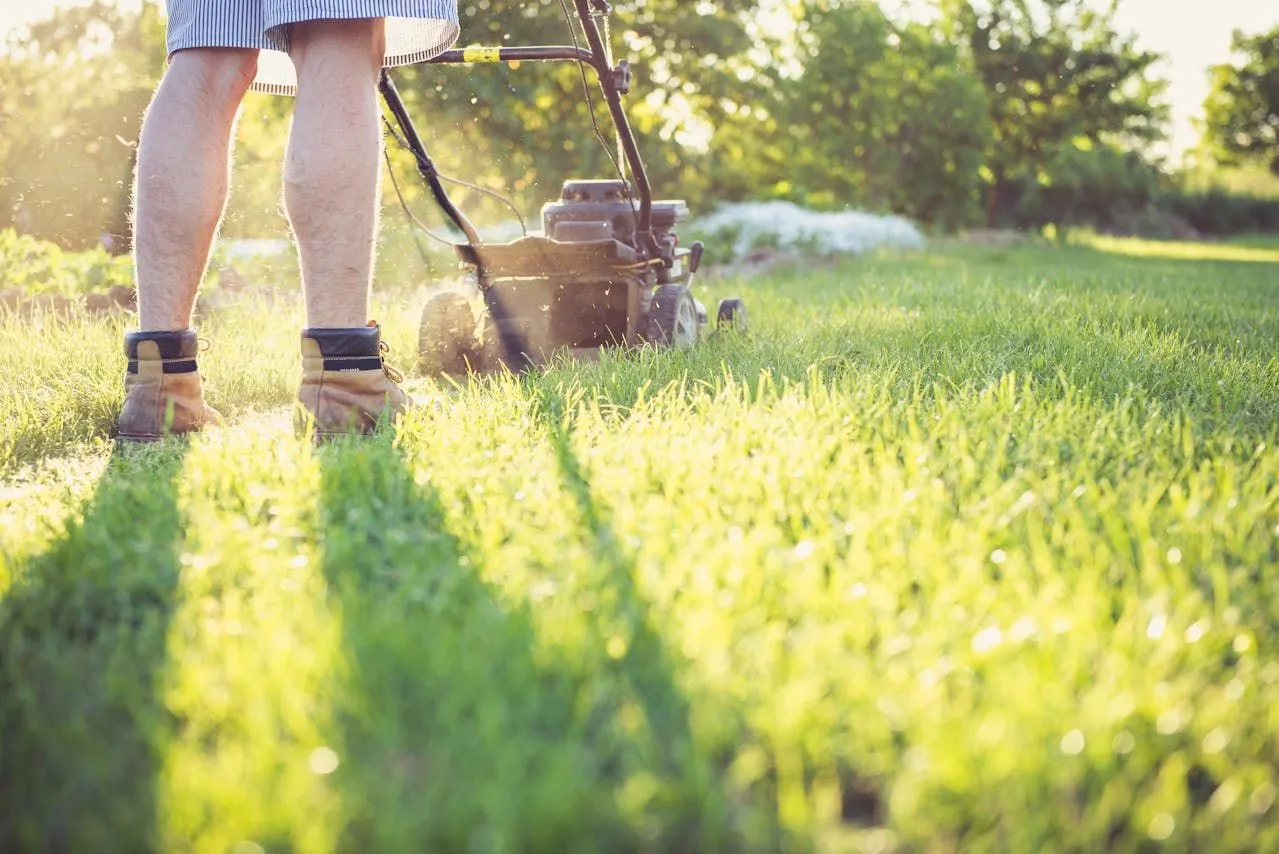
For most lawns, mid-morning provides a good balance between dry grass and moderate temperatures. By this point, overnight moisture has usually evaporated, but the lawn has not yet reached the hottest portion of the day.
Mowing during this period can help produce a cleaner cut while reducing stress on the turf. It can also be more comfortable for the person doing the work compared with mowing during the afternoon heat.
A mid-morning mowing schedule offers several advantages:
Although early morning can seem like a convenient time to mow, lawns are often covered in dew at this point. Wet grass can make mowing considerably more difficult and may result in an uneven appearance.
Moisture can cause grass clippings to stick together and accumulate beneath the mower deck. Tires and foot traffic can also leave impressions in saturated soil, particularly when the ground is soft.
Waiting until the grass has dried can help prevent:
The middle of the afternoon is generally not the best time to mow, especially during hot Illinois summers or other periods of intense heat. Grass is already dealing with higher temperatures and increased moisture loss, and mowing removes part of the leaf surface it uses to produce energy.
Cutting the lawn during extreme heat can make recovery more difficult. Freshly cut turf may also lose moisture more quickly when exposed to strong sunlight and hot conditions.
If temperatures are unusually high, consider mowing earlier in the day rather than waiting until the afternoon. Raising the mowing height slightly during stressful weather can also help preserve more leaf surface.
If you cannot mow during the morning, late afternoon can sometimes provide another suitable opportunity. The key is to avoid the hottest portion of the day and make sure there is enough time for the grass to recover before nighttime.
Late-afternoon mowing may work particularly well when temperatures have started to decline and the lawn is completely dry. However, homeowners should avoid mowing immediately before evening dew develops.
A late-afternoon mowing session is generally preferable to cutting during peak midday heat, provided the grass is dry and conditions are reasonable.
Mowing in the evening may seem convenient, but it can create several problems. Grass cut close to sunset may remain damp for an extended period, especially when nighttime humidity is high.
Freshly cut grass that stays wet overnight may have a greater opportunity for certain lawn diseases to develop. There is also less daylight available to identify uneven areas, obstacles, or other problems in the yard.
If evening is the only time available, try to mow early enough that the grass has an opportunity to dry before nighttime moisture settles in.
The clock is not the only factor that determines whether it is a good time to mow. Weather conditions can change throughout the day and should be considered before starting the mower.
Postpone mowing when:
Grass species respond differently to temperature and seasonal conditions. Cool-season grasses generally grow most actively during the cooler portions of spring and fall, while warm-season grasses perform better during summer heat.
This means mowing conditions can vary depending on the type of turf in your yard. A cool-season lawn may require more attention to heat stress during summer, while warm-season turf may tolerate mowing during warmer conditions when it is actively growing.
Understanding your grass type can help you determine:
Even perfect mowing timing cannot compensate for equipment that is poorly maintained. A sharp mower blade is especially important because it cuts grass cleanly instead of tearing or shredding the blades.
Before mowing, make sure your equipment is in good condition and that the cutting height is appropriate for your lawn.
Important mower maintenance tasks include:
There is no single clock time that works perfectly for every lawn or every day. However, mid-morning after the dew has dried is generally the best time of day to mow because temperatures are usually comfortable and the grass has time to recover before evening.
Late afternoon can also work when morning mowing is not practical, while early morning, peak afternoon heat, and late evening are generally less desirable.
Ultimately, the goal is to mow when the grass is dry, temperatures are reasonable, and weather conditions are favorable. Paying attention to these factors can help reduce turf stress, improve the appearance of your lawn, and make routine mowing more effective.
Q: What is the best time of day to mow a lawn?
A: Mid-morning, after the morning dew has dried and before temperatures become too hot, is generally the best time to mow.
Q: Is it okay to mow the lawn early in the morning?
A: It is better to wait if the grass is covered in dew. Mowing wet grass can lead to clumping, uneven cuts, and soil compaction.
Q: Should I mow during the afternoon?
A: Avoid mowing during the hottest part of the afternoon whenever possible. High temperatures can increase stress on freshly cut grass.
Q: Can I mow my lawn in the evening?
A: You can, but it is generally better to mow early enough that the grass has time to dry before nighttime moisture develops.
Q: Is it bad to mow wet grass?
A: Mowing wet grass can produce an uneven cut, clog the mower, create clumps of clippings, and potentially damage soft soil.
Q: Does the best mowing time change during summer?
A: Yes. During hot weather, mowing earlier in the day is often preferable because the lawn is less likely to experience additional heat stress immediately after being cut.

