
Last Updated:
June 9, 2026
One of the clearest signs your lawn needs aeration is poor water absorption. Beneath the surface, soil conditions play a huge role in how well grass roots grow, absorb nutrients, and handle stress throughout the year. Aeration is one of the most effective ways to improve those conditions, yet many homeowners aren’t sure when it’s actually needed.
We have put this blog post together to help you recognize the most common warning signs that your lawn needs aeration so you can address problems early and restore long-term turf health.
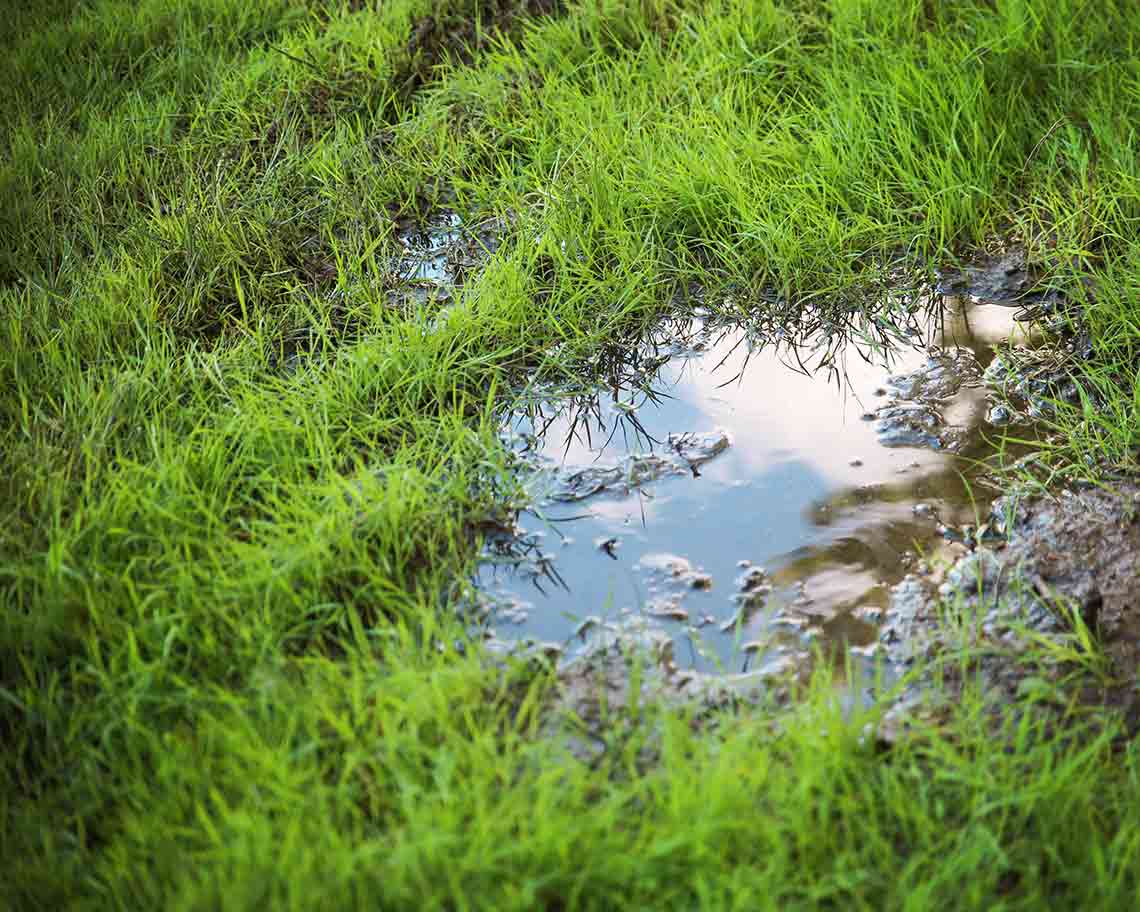
If water consistently pools on the surface or runs off instead of soaking into the soil, compaction is likely preventing moisture from reaching the root zone. Compacted soil creates a barrier that restricts water movement, leading to shallow roots and increased stress during dry periods.
Lawns with poor drainage often look fine immediately after watering or rain, but the grass quickly dries out because moisture never penetrates deeply enough. Over time, this cycle weakens the turf and makes it more vulnerable to heat, disease, and drought.
Healthy soil should feel slightly springy underfoot, not hard and compacted. If walking across your lawn feels more like stepping on concrete than grass, compaction is likely restricting root growth. This is especially common in lawns with heavy foot traffic, clay-based soils, or frequent use by kids and pets.
Hard soil limits oxygen exchange and prevents roots from expanding downward. As a result, grass becomes shallow-rooted and dependent on frequent watering just to survive. Compacted lawns also struggle to recover from stress because roots lack the space needed to regenerate.
When a lawn continues to look thin, weak, or discolored even after regular watering and fertilization, the issue may not be surface-level care. Compacted soil prevents nutrients, oxygen, and water from reaching the roots, making even the best lawn care program less effective.
In these cases, fertilizers may sit near the surface instead of being absorbed properly. Grass may show uneven color, slow growth, or persistent thinning despite consistent maintenance efforts.
Thatch is a layer of organic material made up of dead grass stems, roots, and debris that accumulates between the soil and living turf. While a thin thatch layer can be beneficial, excessive buildup can block air, water, and nutrients from reaching the soil.
Compacted lawns tend to develop thatch more quickly because reduced microbial activity slows natural decomposition. As thatch thickens, it creates an additional barrier that worsens existing soil problems.
Strong lawns have deep, well-developed root systems. If grass pulls up easily or roots appear thin and shallow, compacted soil may be limiting root growth. Shallow roots make lawns more susceptible to heat stress, drought damage, and disease.
When roots can’t grow downward, grass relies on surface moisture and becomes dependent on frequent watering. This leads to increased maintenance needs and reduced resilience during extreme weather.
Areas that experience frequent foot traffic, such as walkways, play areas, or pet paths, often show signs of wear before the rest of the lawn. Compaction occurs faster in these locations, causing grass to thin out and struggle to recover.
Even with proper care, compacted high-traffic zones may remain bare or weak because roots simply don’t have room to grow. Over time, these areas can expand and affect the surrounding lawn.
Healthy lawns bounce back relatively quickly from mowing, heat, or mild drought. If your lawn takes an unusually long time to recover from stress, compacted soil may be slowing root repair and growth.
Poor recovery often shows up as lingering discoloration, thinning, or uneven growth patterns that persist long after conditions improve. This indicates that the lawn lacks the underground support needed to regenerate efficiently.
Q: What exactly does lawn aeration do?
A: Aeration removes small cores of soil to relieve compaction, improve airflow, and allow water and nutrients to reach grass roots more effectively.
Q: How often should a lawn be aerated?
A: Most lawns benefit from aeration once per year, though heavily compacted or high-traffic lawns may need it more frequently.
Q: Is aeration necessary if my lawn looks okay?
A: Yes. Some soil issues develop below the surface before visible symptoms appear. Preventive aeration can help maintain long-term turf health.
Q: When is the best time to aerate a lawn?
A: The ideal timing depends on grass type, but aeration is generally most effective during active growth periods in spring or fall.
Q: Can I aerate my lawn myself?
A: DIY aeration is possible, but professional equipment provides deeper, more consistent results, especially for compacted soils.
Q: How long does it take to see results after aeration?
A: Initial improvements can appear within a few weeks, with the most noticeable results developing over the following growing season.

